Are trucks the most important part of your skateboard setup?
As previously noted, skateboard trucks are super important. Some even argue that trucks are just as, if not more, important than the deck itself. Regardless of your standpoint, the fact that there is even an argument surrounding the matter only proves how vital it is to get along with your trucks. Before we get into the history of skateboard trucks, if you are here to understand the nitty-gritty of how trucks work, or perhaps what specific size of truck you need, check out our Skateboard Trucks Buyers Guide here.
A brief history of the skateboard truck
The "first" truck brand
There are a few brands that claim to be the very first skateboard truck manufacturer, but for us at Supereight, Tracker Trucks were the originators. In 1974, a man named Larry Balma found his love for skateboarding again after the creation of the polyurethane wheel revolutionised the performance of skateboards. However, for Larry, this progression of skateboard wheel technology meant the trucks skaters were using at the time needed similar treatment. The recycled roller-skate trucks used at the time were weak, way too skinny and didn’t even fit the newly created eight-millimetre precision bearings designed for urethane wheels. Alongside friends Gary Dodds and Dave Dominy, Tracker Trucks was formed in 1975, with the Fultrack truck model released shortly after. The Fultrack was twice as wide as most roller-skate trucks and instantly standardised the most common features of trucks we still see to this day. Stationary kingpins with adjustable top-mounted locknuts, four-hole mounting on the baseplates and hangers designed with a reinforced triangular truss.
New competitors and gimmicks
Soon after the release of the Fultrack, brands such as Gullwing and Z-Flex began creating their own trucks. Weirdly enough, when compared to Tracker trucks, these brands created trucks that, although they helped push truck technology forward, ended up looking pretty peculiar. Gullwing released the Split Axle truck, which would soon become the Phoenix, designed to allow the skater far more adjustability. Z-Flex released the Z-Roller truck, designed to ‘grind’ with ease, with an axle that rolled over the coping, rather than, you know, actually grind it.
The rise of modern truck brands, Independent was the pioneer
Sadly, the brands mentioned above are now quite hard to find. However, one truck company that entered the market during the late 70s is still very much at the top of its game today - Independent Trucks. The Stage I truck from Indy, released in 1978, borrowed aspects of the Tracker design blueprint, such as the kingpin design, and added far more strength to the whole truck. The trucks were made from aircraft-standard aluminium alloy, and the axles were made from incredibly strong steel alloy. A year later, the Stage II was released, with further reinforcements made. By 2012, the Stage XI (the truck all Indy dudes know and love to this day) was released, and since then, continuous developments have been made. For example, sturdier yet lighter materials such as titanium are now used in some models, and inverted kingpin baseplates have been released and refined. As well as a new and improved Stage 4 model, reintroduced to the market.
Mid '80s challenger brands: Venture, Thunder and Grind King
As the 1980s rolled in, skateboarding was slowly finding its footing in the world of street skating, and brands such as Venture, Thunder and Grind King entered the game. Venture was the first onto the scene, and due to the timing around its release, they became known for their street skating abilities. Not only that, with a deliberate concentration on being budget-friendly, kids all over were scooping them up. In fact, after a few years, with Greg Carroll at the helm at Venture, features like the baseplate drill pattern, designed to handle slides, were groundbreaking. By 1986, Thunder Trucks were released, and with their combination of responsiveness, strength and lightness, Thunder quickly became a solid truck choice for many street skaters.
Inverted kingpins
In 1988, Donald Cassel, an American pool skater with a passion for invention, came into the fray. Well, Donald sure did invent something. Something so important that, to this day, brands are still trying to replicate and perfect his design. It was, of course, the Grind King inverted kingpin! Designed to flip the classic kingpin mounting and place the nut on the underside of the baseplate, giving the hanger substantially more space between itself and the top of the kingpin, resulting in smiths and feeble grinds catching far less frequently. A few years into the 1990s, Grind King was the 3rd most popular truck on the market.
A maturing market
By the late 1990’s, trucks were pretty similar to what we skate nowadays - at least in the sense of the foundation as to what makes a solid skateboard truck had been set. Drill hole patterns were standardised, kingpins all sat as low as the geometry would allow, and durability was a key focus for all brands. So, when Royal Trucks entered the market in 1999, rather than blowing minds with brand new technology, Royal created a high-quality truck at an affordable price. With Guy Mariano and Rudy Johnson being the faces of the company, Royal was incredibly well respected by skaters almost immediately.
The 2000s then became the era of refinement of skateboard truck technology. Tensor Trucks, for example, started in 2000 and added polymer baseplate sliders, designed to decrease friction in tail and nose slides, thus making flips out easier… Apparently.
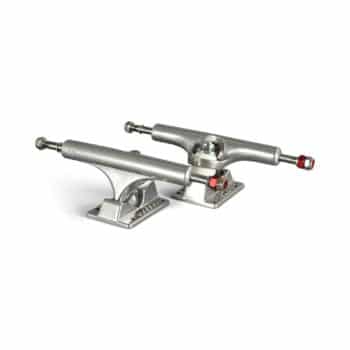
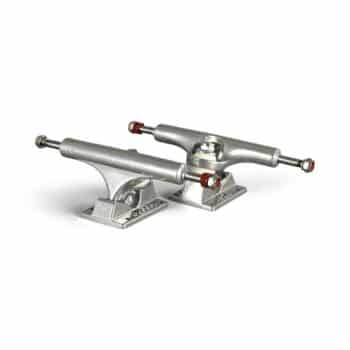
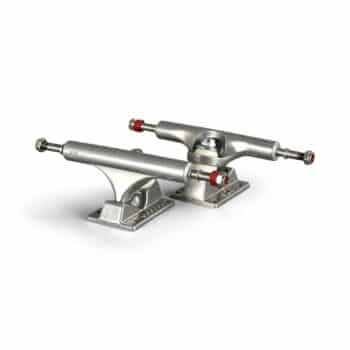
In 2007, Ace Trucks came onto the market. The owner, Joey Tershay, left Independent to start Ace Trucks, taking inspiration from the Indy Stage III geometry and creating the Ace Classic model. Something that quickly gained cult status among truck nerds from all over the world. In 2021, the Ace AF1 was released, further cementing Ace’s place as one of the most responsive and well-made trucks on the market. By this time, it felt as though the truck industry had matured; entering the market was becoming increasingly expensive, and the options available from established brands were plentiful. However, the early 2020s introduced two brand-new brands - Lurpiv Trucks and Slappy Trucks.
2020 and new ideas
Lurpiv, started by Swedish star boy, Oskar ‘Oski’ Rozenberg, gave the skateboard truck the full classic Volvo treatment, squared off and brutally durable, made from materials never seen in the truck market before. Admittedly, these trucks took some serious trial and error to dial in, but nowadays, they are possibly one of the most slept on trucks in the market, and to be fair, when looking at them, you can see why. These are a clear "Marmite" truck; you either think they look amazing or horrendous. What we can assure you is one thing: they skate fantastically.
Slappy, on the other hand, has taken a traditional approach, aesthetically. However, Mike Sinclair - the legend behind the brand - made it his goal over the COVID period to create a truck with the lowest set kingpin on the market, and he absolutely did that. If you want a truck that’s budget-friendly and almost impossible to catch on feebles and smith grinds, Slappy may just be the option for you!
All of the truck brands mentioned above (post-1990s) are solid choices. You will not show up to a skatepark or spot with any of these brands and have someone give you a weird look. What is most important is that you choose a truck that suits your skating. Don’t worry about which brand is the coolest, or what your homies are skating, unless of course, you’ve tried theirs and they feel great. Again, if you really want to get into the fine details of how certain trucks skate, please visit our Skateboard Trucks Buyers Guide page! Or, give us a call; we are always more than happy to chat about skate hardware.
Who knows what’s next for the world of skateboard trucks? All we know is that we are super excited to see!